Most small businesses ask this question after one of two experiences:
- They tried Google Ads and it felt expensive, unpredictable, or confusing.
- They haven’t tried it yet, and they’re unsure if the platform is only for big brands.
Both reactions are reasonable.
Google Ads can be one of the fastest ways for a small business to generate leads.
It can also be one of the quickest ways to waste budget.
The difference is not business size.
The difference is system quality.
This article explains when Google Ads works for small businesses, when it doesn’t, and what conditions decide the outcome.
The Short Answer
Yes, Google Ads can work extremely well for small businesses.
Even on modest budgets.
Even in competitive markets.
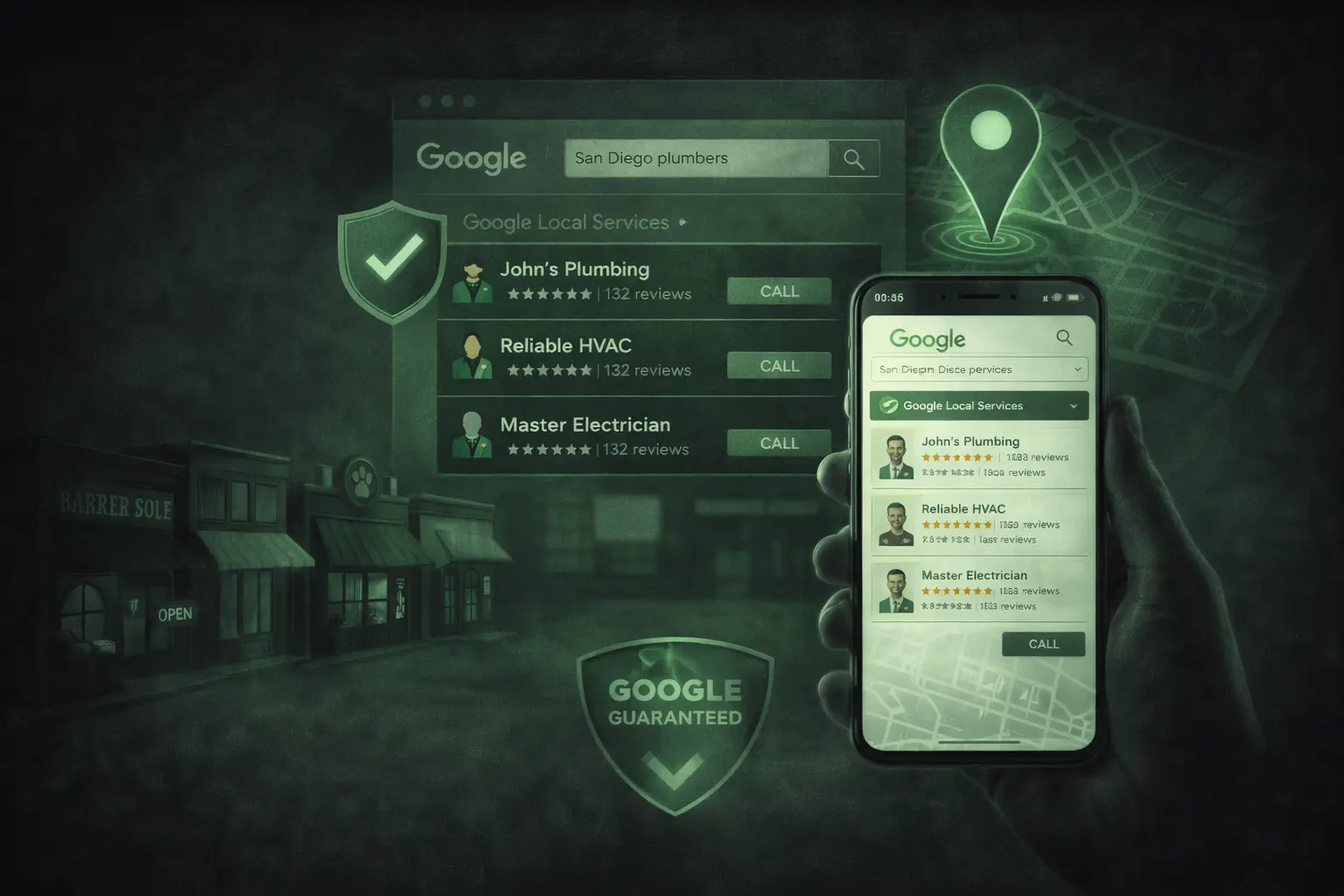
Google itself positions Ads as a direct channel for local lead generation when conversion tracking and targeting are set up correctly.
But it only works when the campaign is built around:
- intent
- structure
- conversion discipline
- economics
Not hope.
Why Small Businesses Think Google Ads “Doesn’t Work”
Most small businesses don’t fail because Google Ads is broken.
They fail because they run ads like traffic campaigns, not lead systems.
Common symptoms:
- clicks come in, leads don’t
- calls are inconsistent
- cost per lead fluctuates
- campaign feels unstable
This is not unusual.
Even in PPC communities, small business owners often report frustration when ads are launched without strategy or clean tracking.
Google Ads is not a slot machine.
It is an optimization platform.
If the inputs are unclear, the output will be noisy.
What Google Ads Does Better Than Almost Any Channel
Small businesses win with Google Ads because of one advantage:
intent.
Someone searching:
- “emergency plumber near me”
- “visa consultant UK appointment help”
- “desert safari booking tonight”
is not passively browsing.
They are mid-decision.
That is why paid search remains one of the most direct lead channels for service businesses.
Google Ads operates on a pay-per-click model, meaning you pay when someone actively engages.
When intent is real, small budgets can outperform bigger brands with weaker alignment.
When Google Ads Works Best for Small Businesses
Google Ads performs best when four conditions are true.
1. You Sell a Clear Service With Immediate Demand
Examples:
- home services
- local booking businesses
- visa and documentation services
- high-intent consultations
If people are already searching, Ads becomes an interception tool.
If demand is vague, Ads becomes expensive education.
2. Your Targeting Is Local and Controlled
Small businesses don’t need global reach.
They need qualified proximity.
Google’s own guidance emphasizes that local lead generation requires tight geographic focus and measurable conversion actions.
Broad targeting creates broad waste.
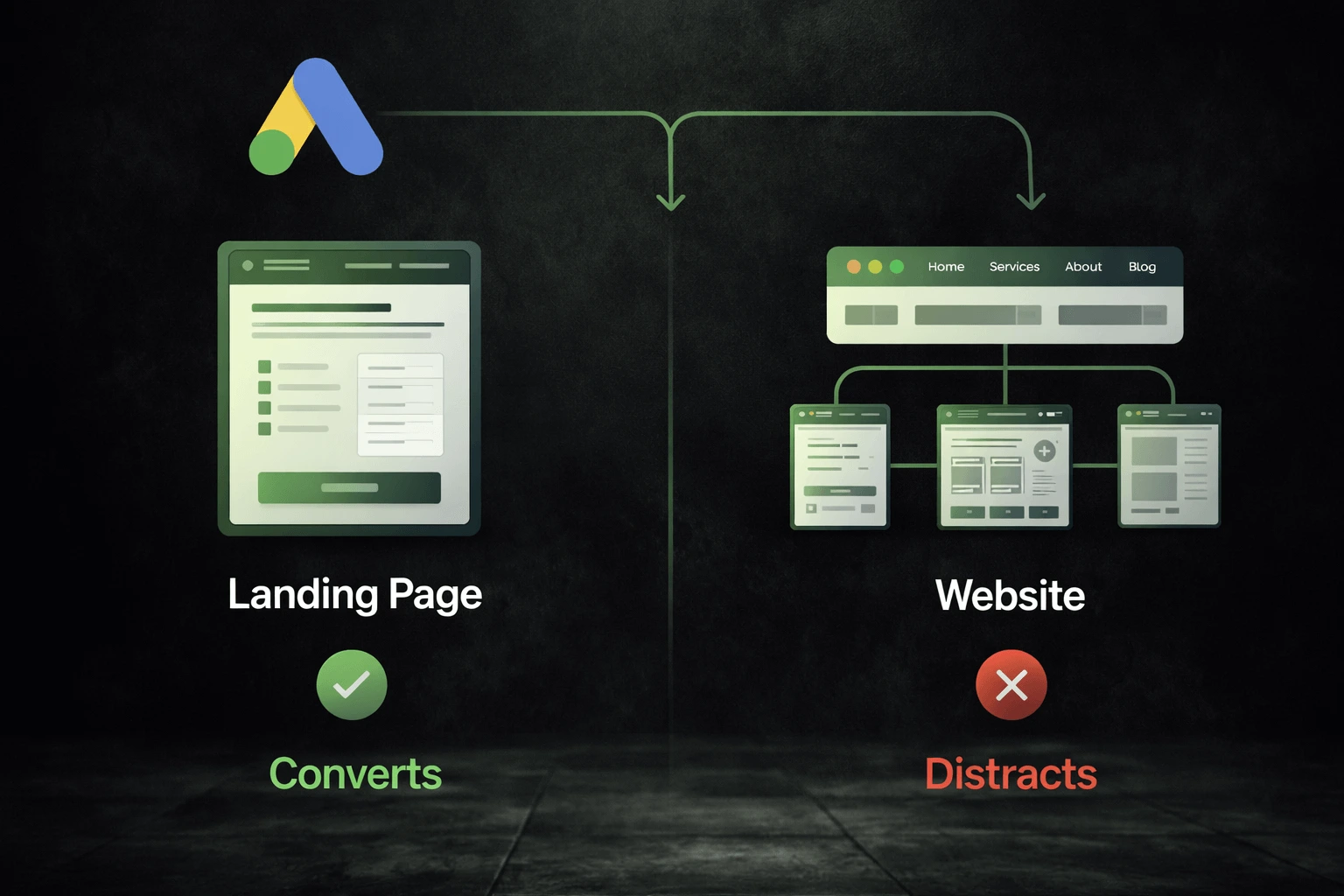
3. Your Landing Experience Reduces Friction
Most small business websites are informational.
Google Ads traffic is transactional.
Visitors need answers fast:
- pricing
- availability
- trust
- next step
A slow or confusing landing page turns paid intent into bounce rate.
4. Conversion Tracking Is Real
Tracking button clicks is not tracking outcomes.
Small businesses often overestimate performance because they track activity instead of leads.
A conversion is not always a sales lead, lead validation matters.
Google’s algorithm optimizes what you feed it.
If you feed it noise, it learns noise.
Why Small Budgets Fail Faster
Large brands can afford inefficiency.
Small businesses cannot.
This is why structure matters more at small scale:
- fewer keywords
- tighter ad groups
- clearer offers
- simpler funnels
- fast follow-up
Google Ads does not reward spending.
It rewards clarity.
The Mistake Small Businesses Make: Competing Like Big Brands
Small businesses think they need to do more:
- more keywords
- more campaigns
- more traffic
- more platforms
The opposite is usually true.
Small businesses win by doing less, better:
- one high-intent offer
- one focused landing page
- one conversion action
- one clean campaign structure
That is how you create predictability.
What to Expect in the First 30 Days
Google Ads is not instant perfection.
A realistic timeline:
- Week 1: data collection
- Week 2: query refinement
- Week 3: conversion signal improvement
- Week 4: stability begins
If there is no progress in 30 days, the issue is rarely budget.
It is usually:
- mismatched intent
- weak landing page
- poor tracking
- bad follow-up system
Final Insight
Google Ads works for small businesses when the business treats it as a system.
Not an experiment.
Not a boost button.
Not traffic.
Small businesses don’t lose because they are small.
They lose because their campaigns are built without:
- intent structure
- funnel discipline
- signal clarity
When those are in place, Google Ads becomes one of the most scalable lead engines available.
Quick Audit Offer
If your small business is running Google Ads but results feel inconsistent or unpredictable, I can review your structure and show you where performance is leaking. I focus on intent alignment, landing experience, and signal quality, because those three elements decide ROI.
Send me a message if you want an experienced Google Ads specialist to take a focused look at your account.